ETP Plant Cost in India | Price, Installation & Key Factors
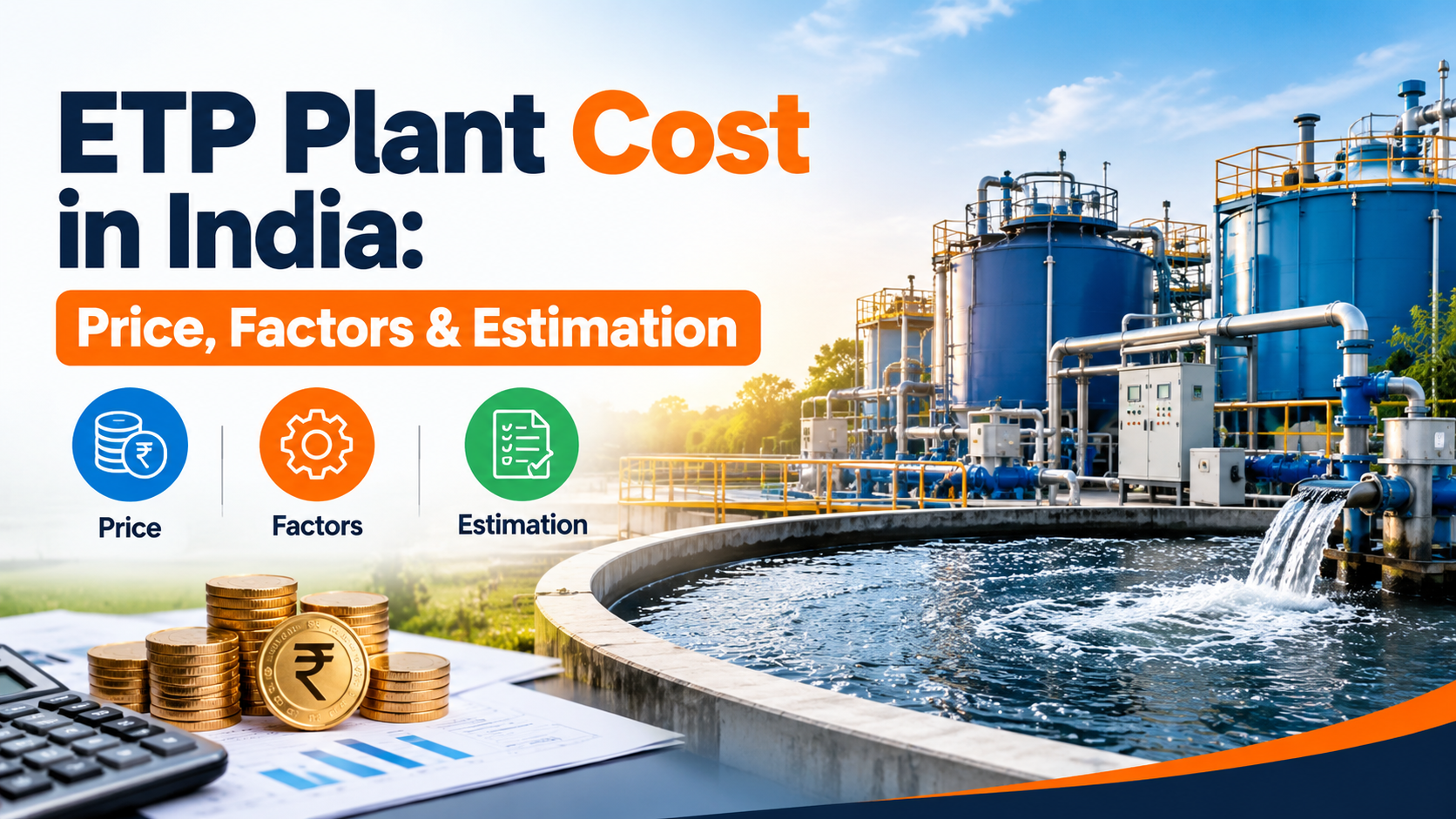
ETP Plant Cost in India depends on several factors, including plant capacity, wastewater quality, treatment technology, equipment selection, installation requirements, and automation. Businesses need to understand these factors before choosing an Effluent Treatment Plant for their facility.
An Effluent Treatment Plant (ETP) treats industrial wastewater before discharge or reuse. It helps industries manage wastewater responsibly while supporting compliance with applicable environmental requirements. Therefore, proper cost planning is important for both new and existing industrial facilities.
ETP Plant Cost in India: What Determines the Price?
The overall ETP Plant Cost in India varies from project to project. A small plant for a limited wastewater flow will usually require a different investment than a large industrial treatment system.
The major factors affecting the cost include:
- Plant capacity measured in KLD
- Type and characteristics of wastewater
- Required treatment process
- Civil construction requirements
- Pumps, tanks, filters, and other equipment
- Automation and electrical systems
- Installation and commissioning
- Sludge handling requirements
- Water reuse requirements
Because every industrial wastewater stream is different, an accurate quotation should be based on project-specific data rather than a standard price.
ETP Plant Price in India and Cost per KLD
The ETP Plant Price in India is closely related to the treatment capacity. Capacity is commonly expressed as KLD, which means kilolitres per day.
The ETP Plant Cost per KLD can vary because two plants with the same capacity may require different treatment processes. For example, wastewater from manufacturing, food processing, hospitals, or hotels may have different pollutant characteristics.
Therefore, ETP Plant Price per KLD should not be considered a fixed market rate. A reliable ETP Plant Cost Estimation should consider wastewater analysis, required outlet quality, process design, equipment specifications, and installation conditions.
What Is Included in Effluent Treatment Plant Cost?
The Effluent Treatment Plant Cost generally includes several components rather than only the main treatment tanks.
Depending on the project, the system may include collection tanks, equalization tanks, chemical dosing systems, aeration systems, clarifiers, filtration units, sludge handling equipment, pumps, control panels, and treated-water storage.
The final cost also depends on whether the plant is designed for discharge, recycling, or partial water reuse. A detailed technical assessment helps identify the right equipment without adding unnecessary components.
ETP Plant Installation Cost
The ETP Plant Installation Cost depends on site conditions and the complexity of the treatment system. Installation may include equipment placement, piping, electrical connections, instrumentation, testing, and commissioning.
Site accessibility can also affect installation work. Existing civil structures, available space, drainage arrangements, and electrical infrastructure should be checked before installation begins.
A professional installation process helps ensure that the plant operates according to its intended design.
Industrial ETP Plant Cost: Capacity and Process Matter
Industrial ETP Plant Cost depends strongly on the type of industry and wastewater generated. Industries may produce wastewater containing organic matter, suspended solids, oil and grease, chemicals, or other contaminants.
For this reason, the treatment process should be selected according to actual wastewater characteristics. A wastewater test can help determine the appropriate process sequence and equipment requirements.
For example, facilities with specialized wastewater may require additional chemical treatment, advanced filtration, or other treatment stages. This can increase the initial investment but may provide better treatment performance and support water reuse objectives.
ETP Plant Operating Cost
Initial investment is only one part of the total cost. ETP Plant Operating Cost should also be considered during project planning.
Operating expenses may include electricity, chemicals, manpower, filter media, replacement parts, sludge handling, testing, and routine maintenance. Efficient equipment selection and proper operation can help control these recurring expenses.
Regular maintenance is also important. Pumps, blowers, dosing systems, filters, and electrical components should be inspected according to the manufacturer's recommendations.
ETP Plant Cost Estimation Before Installation
A proper ETP Plant Cost Estimation should begin with basic project information. This includes daily wastewater generation, operating hours, wastewater characteristics, required treated-water quality, available space, and the intended use of treated water.
For industries that require specialized wastewater treatment, professional process design can provide a clearer understanding of both capital and operating requirements.
The same approach is useful for commercial facilities with specific wastewater needs. For example, businesses can explore solutions designed for an ETP Plant for Hospitals or an ETP Plant for Hotels.
How to Plan Your ETP Budget
Before selecting an ETP, businesses should compare more than the initial quotation. Consider plant capacity, treatment performance, equipment quality, energy requirements, maintenance needs, automation, installation support, and after-sales service.
A detailed technical proposal can make the comparison easier. It should clearly explain the treatment process, major equipment, capacity, expected performance, installation scope, and operating requirements.
This approach helps businesses create a practical wastewater treatment budget based on their actual requirements.
Conclusion
ETP Plant Cost in India depends on capacity, wastewater characteristics, treatment technology, equipment, installation, and operating requirements. There is no single price that fits every industrial project.
Understanding the ETP Plant Price in India, ETP Plant Cost per KLD, installation requirements, and recurring operating expenses can help businesses plan their investment more effectively. A site-specific assessment and detailed ETP Plant Cost Estimation can provide a more realistic project budget.
Frequently Asked Questions
1. What is the ETP Plant Cost in India?
The ETP Plant Cost in India varies according to capacity, wastewater characteristics, treatment technology, equipment, installation, and automation requirements.
2. How is ETP Plant Cost per KLD calculated?
ETP Plant Cost per KLD is influenced by plant capacity and process requirements. A technical assessment is needed for an accurate project estimate.
3. What affects ETP Plant Installation Cost?
The ETP Plant Installation Cost depends on site conditions, plant configuration, piping, electrical work, civil requirements, equipment placement, and commissioning.
4. Does ETP Plant Operating Cost matter after installation?
Yes. ETP Plant Operating Cost may include electricity, chemicals, manpower, maintenance, testing, sludge management, and replacement components.
5. How can I get an accurate ETP Plant Cost Estimation?
An accurate ETP Plant Cost Estimation should consider wastewater flow, wastewater characteristics, treatment objectives, plant capacity, site conditions, and required treated-water quality.