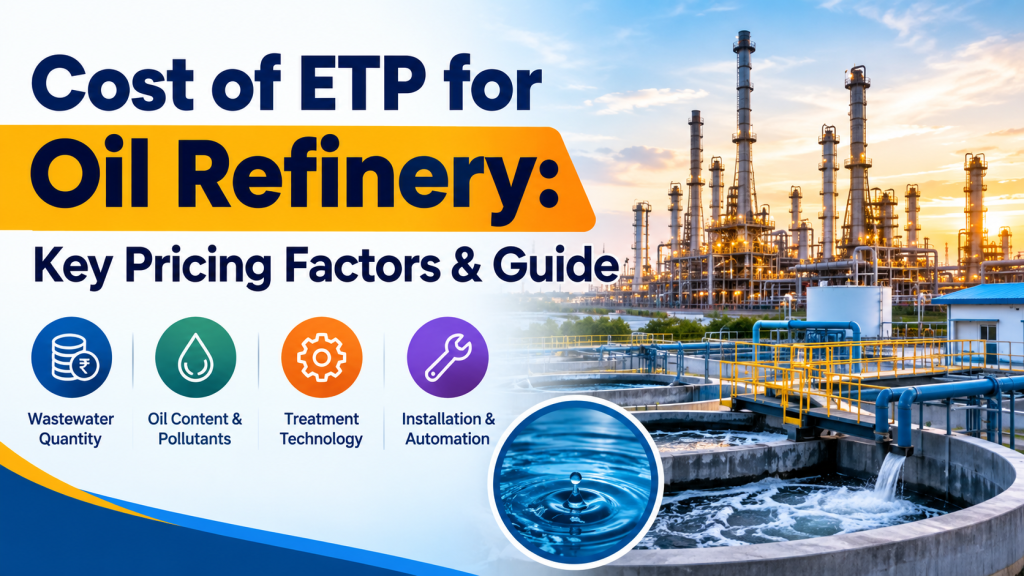
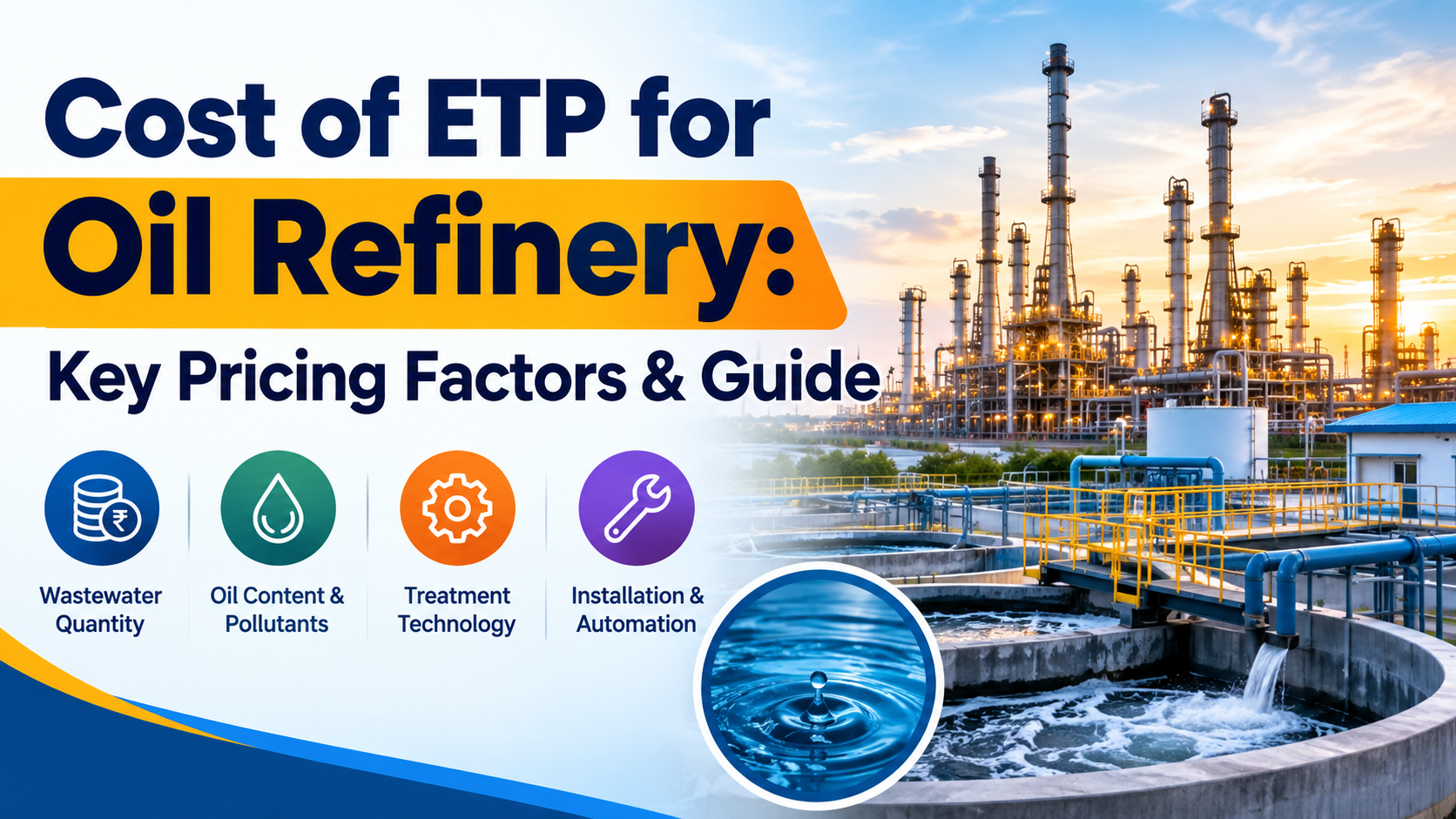
Cost of ETP for Oil Refinery: Important Factors to Consider
Oil refineries use large quantities of water for processing, equipment cleaning, cooling, and other industrial operations. During these activities, wastewater can collect oil residues, hydrocarbons, suspended particles, and chemical contaminants. This water requires appropriate treatment before it can be discharged or considered for reuse.
The cost of ETP for oil refinery projects depends on the type of wastewater generated, the quantity requiring treatment, and the quality standards the plant must achieve. Understanding these requirements before installation helps refinery operators select an appropriate treatment system and plan their investment more effectively.
Why Do Oil Refineries Need a Specialized ETP?
Refinery wastewater is not always consistent in its composition. Water from equipment washing may contain substantial oil residues, while wastewater from processing operations can carry dissolved organic pollutants and other chemical compounds.
A conventional treatment arrangement may not be sufficient for every refinery application. The treatment process must address the specific contaminants present in the incoming water and maintain suitable performance under changing operating conditions.
An Effluent Treatment Plant (ETP) helps manage these wastewater streams through a combination of separation, chemical, biological, and filtration processes, depending on the treatment requirements. Properly treated water may also be suitable for selected industrial reuse applications when it meets the relevant quality specifications.
What Determines the Cost of ETP for Oil Refinery?
Several engineering decisions influence the overall project budget. Each refinery requires an assessment based on its wastewater characteristics and operational requirements.
1. Wastewater Quantity and Flow Variations
The volume of wastewater generated daily determines the basic treatment capacity. A refinery producing larger volumes may require bigger tanks, higher-capacity pumps, and additional equipment.
However, average daily flow is not the only consideration. Wastewater generation can fluctuate during maintenance, cleaning, and changes in production. The plant must be designed to manage these variations without compromising treatment performance.
Accurate flow measurements help engineers establish appropriate equipment capacities and avoid unnecessary expenditure caused by incorrect sizing.
2. Oil Content and Pollutant Characteristics
The type of contamination has a significant effect on treatment selection. Free oil can often be separated more readily than fine oil droplets that remain dispersed in water. Dissolved organic compounds may require additional treatment after the oil has been removed.
Laboratory testing helps determine important parameters such as oil and grease, COD, BOD, pH, and suspended solids. Depending on the refinery process, further analysis may be necessary.
These results help determine whether the plant needs oil separation, chemical conditioning, flotation, biological treatment, or additional polishing stages.
3. Treatment Equipment and Technology
An oil refinery ETP may include several interconnected treatment units. Oil-water separators can remove suitable free-oil fractions, while equalization tanks help balance variations in wastewater flow and composition.
Chemical treatment and dissolved air flotation may be used when emulsified oil or suspended contaminants require additional removal. Biological treatment can address biodegradable organic pollutants when wastewater conditions are suitable.
The selected configuration influences equipment requirements, energy consumption, chemical usage, and maintenance needs. Therefore, the treatment process should be selected according to wastewater analysis rather than installing every available technology.
4. Installation and Automation Requirements
The project budget may include treatment tanks, foundations, pipelines, pumps, electrical connections, control panels, and commissioning activities. Existing infrastructure can reduce some installation requirements, while a completely new facility may require more extensive construction.
Automation also influences the project scope. Instruments for monitoring flow, pH, and other process conditions can help operators maintain consistent treatment performance. The required control system depends on the complexity of the plant and the refinery's operating procedures.
How Does an Oil Refinery ETP Work?
The treatment sequence depends on the incoming wastewater, but several processes are commonly considered during system design.
Initially, screening and oil-water separation may remove larger impurities and recoverable free oil. The wastewater can then enter an equalization tank, where variations in flow and pollutant concentration are managed.
If necessary, chemical conditioning and flotation help remove emulsified oil and suspended particles. Biological treatment may follow to reduce biodegradable organic matter. Filtration or other advanced treatment can be added when the required outlet quality demands it.
Not every refinery needs the same sequence. The final arrangement must reflect the wastewater characteristics, discharge requirements, and intended use of the treated water.
How to Estimate the Project Budget
Preparing an estimate begins with identifying the sources of wastewater and measuring their flow rates. Representative samples should then be analysed to understand the pollutants that the treatment plant must remove.
Once the treatment objectives are established, engineers can prepare a process design and identify the necessary equipment. The estimate should separately consider equipment supply, civil work, piping, electrical installations, installation, testing, and commissioning.
Operating expenditure should also be assessed. Electricity, treatment chemicals, labour, routine servicing, replacement components, and sludge disposal can contribute significantly to long-term costs.
Comparing quotations on the basis of treatment performance, included equipment, installation scope, and expected operating expenses provides a more meaningful evaluation than comparing purchase prices alone.
Ways to Manage Long-Term ETP Expenses
Refinery operators can improve treatment efficiency by monitoring wastewater quality and maintaining equipment according to operating requirements. Regular checks of pumps, oil separators, dosing systems, and filtration units help identify performance problems before they become major operational issues.
Where technically appropriate, separating concentrated oily streams from other wastewater can also improve process management. Monitoring chemical consumption, energy usage, and sludge generation provides useful information for controlling recurring expenses.
The goal should be to maintain reliable treatment performance while avoiding unnecessary energy use, chemical consumption, and equipment downtime.
Conclusion
The cost of ETP for oil refinery installations depends on wastewater quantity, contaminant concentration, treatment technology, equipment specifications, site conditions, and the required treated-water quality. A detailed engineering assessment helps establish the correct treatment configuration and provides a realistic basis for budgeting.
By evaluating installation requirements alongside long-term operating expenses, refinery operators can make informed decisions and develop a wastewater treatment system suited to their facility.
Frequently Asked Questions
1. What factors affect the cost of an oil refinery ETP?
The main factors include wastewater capacity, oil concentration, pollutant characteristics, treatment technology, equipment selection, installation, and automation.
2. Can refinery wastewater be reused after treatment?
Yes, treated wastewater may be reused for suitable industrial purposes when it meets the required quality specifications. Additional treatment may be necessary depending on the application.
3. Is biological treatment necessary for every refinery ETP?
No. Its suitability depends on the biodegradable pollutant load and the chemical characteristics of the wastewater.
4. How can an accurate ETP estimate be prepared?
An estimate requires wastewater flow measurements, laboratory analysis, defined treatment objectives, equipment specifications, installation requirements, and operating cost calculations.